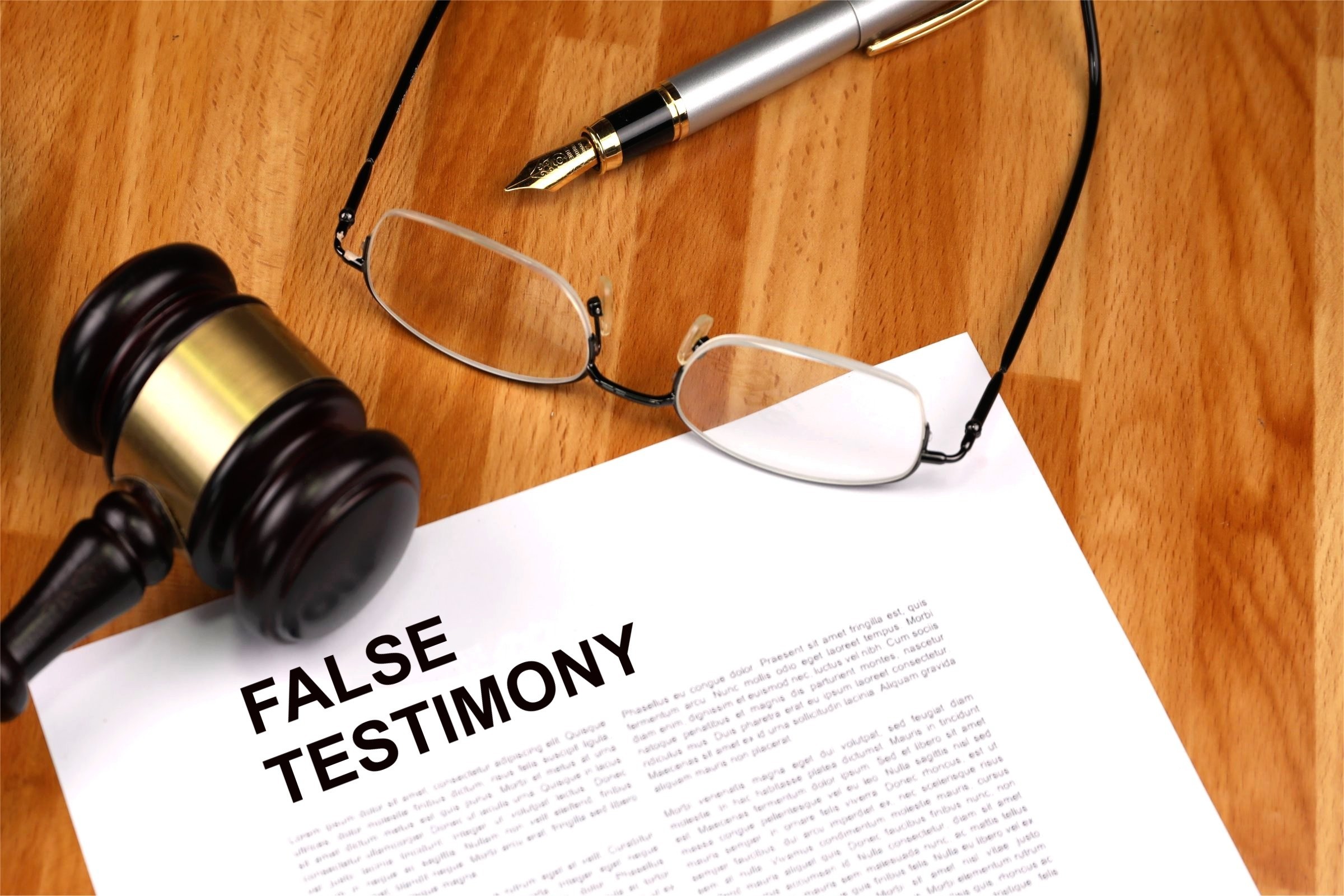
False Testimony
Imagine telling a small lie to avoid trouble. You claim you were stuck in traffic when you actually overslept. Suddenly you need to remember the exact time, the street names, the excuse for your dead phone. One false statement grows into a chain. False testimony works the same way, except it happens under oath in a courtroom. You sit at a witness stand. A lawyer asks a question. You swear to tell the truth. Then you give an answer that is not true. That is false testimony.
People rarely plan to lie in court. They get nervous. They forget details. They try to patch holes in their memory. Panic sometimes fills those gaps with believable details. Other times they know exactly what they are saying and choose deception anyway. The line between a fuzzy memory and a deliberate lie blurs fast. Courts take this seriously because justice rests on honest answers. Judges rely on witnesses to see what actually happened. Juries use those accounts to decide who wins a case or who goes to prison. When testimony drifts from the facts, the whole system stumbles. Innocent people face unfair results. Guilty people walk away. Everyone wastes money chasing ghosts.
The law calls intentional false testimony perjury. You can get fined or sent to jail for it. Prosecutors do not trust a witness words alone. They line up police reports, security footage, phone records, and other accounts. Cross examination exposes the cracks. Lawyers ask next round of questions that test your story against hard evidence. Inconsistencies surface fast when you press them. Witness preparation usually happens behind closed doors before anyone steps into a courtroom. Lawyers walk through every possible question so you know exactly how to answer when the pressure hits. They teach you to pause before speaking. They remind you that guessing is worse than saying you do not recall. The courtroom feels like a tense competition, but it really functions like a careful search for the truth. Everyone in the room wants the same thing. They just need the right path to get there. When you speak plainly and avoid overexplaining, you protect yourself and the process at the same time. Fear drives most people to lie under oath. You worry about losing a job or ruining a relationship. Some think the legal process moves too slow to catch a small untruth. Others believe they protect someone by twisting the facts. The system ignores your reasons. It only tracks whether you spoke the truth while sworn in.
Truth matters most in courtrooms because decisions there change lives forever. You lose money. You lose freedom. You lose time with family. A single false statement can tip a scale that must stay balanced. The best defense stays simple. Know what you actually remember. Admit when you do not. Let the evidence speak instead of your guesswork. Courts expect people to be human. Humans forget things. Humans get scared. Attorneys ask questions slowly and give witnesses time to think. They know pressure warps stories. The goal is never to trap a witness in a lie. The goal is to separate reality from wishful thinking. Keep your answers steady and stick to the facts. The truth usually finds its way into the record. That is how justice stays on solid ground.
The authors of this web site are not professional advisors The content on this blog is not intended to be a substitute for professional advice. Always seek the advice of a qualified professional with any questions you may have regarding this topic. Never disregard professional advice or delay in seeking it because of something you have read on this site.