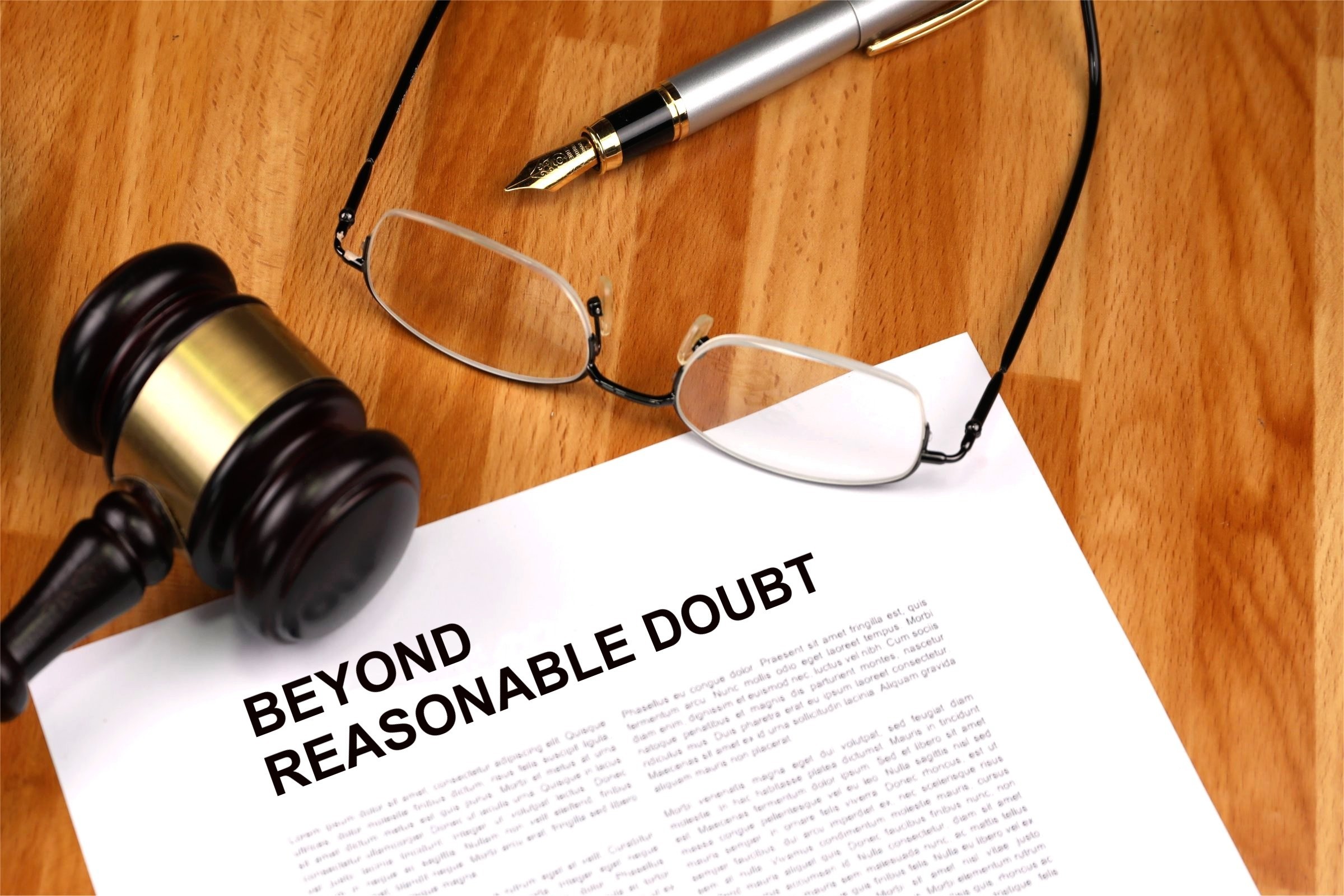
Beyond Reasonable Doubt
You probably heard this phrase on a true crime show or a news clip about a big trial. It sounds heavy. But what does it actually mean when a judge or jury hears those words?
Think about picking between two apartments. One looked perfect online. The photos showed natural light and wide open spaces. Then you visited in person. The floor squeaked everywhere. The water pressure was weak. You walked out feeling uneasy. That unease is the exact opposite of what this legal standard demands.
In a criminal trial, the government can't just say a person probably did something wrong. They can't win by leaning toward guilt even a little bit. They have to prove it beyond reasonable doubt. That means the evidence must be so solid that no sensible question remains. You don't need absolute certainty. Certainty belongs in math class or GPS directions. Law works with people and facts, not perfect formulas. The standard asks for proof that leaves no logical room for another story to make sense.
Why set the bar this high? Because the stakes involve freedom. A wrongful conviction can steal years of life and fracture families. The system would rather release someone who might be guilty than lock up someone who didn't do it. It's a calculated risk. We accept that some guilty people might walk free. We choose that over the danger of punishing innocent citizens.
You'll notice this standard only shows up in criminal cases. Civil lawsuits about money or contracts use a much lower bar. Those cases just need a preponderance of evidence. That simply means the scales tip past fifty percent. If you're suing for a botched car repair, you don't need to prove the mechanic intentionally sabotaged your vehicle. You just need to show it's more likely than not that they messed up. Criminal trials don't work that way. The state must carry the full weight of proof on its own shoulders.
Jurors hear this instruction at the end of every trial. They step into a room with conflicting testimonies, forensic reports, and long pauses. The judge reminds them to keep personal biases at the door. They must look only at what the evidence actually shows. If a reasonable question pops up, they can't ignore it just to reach a quick verdict. Reasonable doubt isn't doubt born from fear or stubbornness. It comes from gaps in the story or facts that simply don't line up.
This phrase protects everyone. It keeps power in check and reminds courts that liberty is fragile. You don't need to memorize case law to understand it. Just remember the feeling of walking away from a deal that felt mostly good but left you with one nagging question. That question matters. In court, it matters enough to stop everything until it's resolved.
The authors of this web site are not professional advisors The content on this blog is not intended to be a substitute for professional advice. Always seek the advice of a qualified professional with any questions you may have regarding this topic. Never disregard professional advice or delay in seeking it because of something you have read on this site.